Andy Burnham Becomes Britain's New Prime Minister
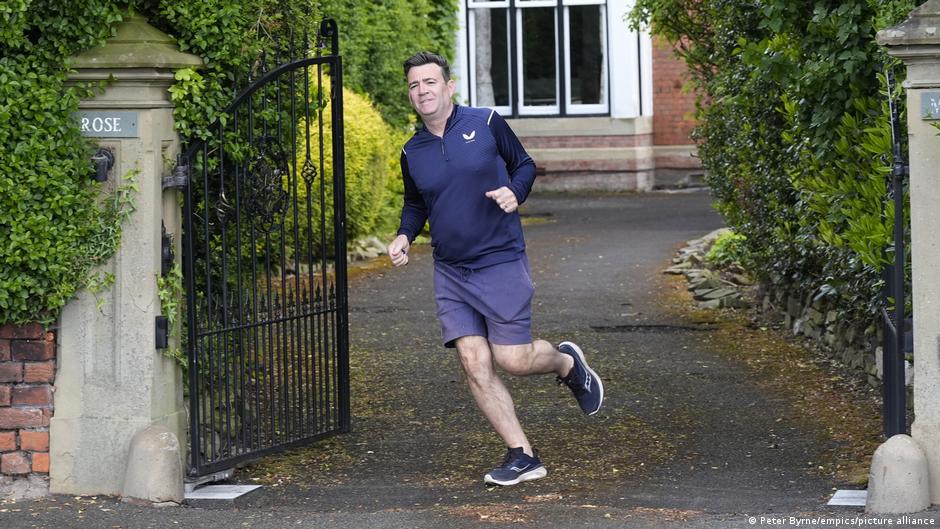
Following the recent resignation of Keir Starmer, Andy Burnham, the former Mayor of Greater Manchester, has been confirmed as the new Prime Minister of the United Kingdom. His appointment marks him as the seventh individual to hold the nation's top political office in the past ten years. Burnham's path to premiership began with a significant victory in a by-election for the Makerfield constituency, which subsequently led to his selection as the leader of the ruling Labour Party.
A Distinguished Political Journey
At 56 years old, Burnham's political career spans decades, encompassing both national parliamentary service and regional leadership. Upon his Makerfield election win, he articulated a vision for national renewal, stating, "Everyone can feel the country isn't where it should be. From here on I will give everything I have got to make it so. To ensure the name Makerfield is forever synonymous with bringing about the change this country needs, bringing back something we've lost — hope — hope for the future." These remarks were widely interpreted as indicative of his prime ministerial aspirations.
Burnham first entered the British Parliament in 2001. During Tony Blair's premiership, he served as a junior minister in the Home Office. His responsibilities expanded under Gordon Brown, who appointed him to roles within the Finance Ministry, the Department for Culture, Media and Sport, and later as Secretary of State for Health. His ambition for leadership within the Labour Party was evident through his two prior campaigns for the party's top position in 2010 and 2015.
In 2017, Burnham transitioned from national politics to assume the role of Mayor of Greater Manchester, a region home to approximately 2.8 million residents in northern England. During his tenure, he was re-elected twice, most recently securing nearly two-thirds of the vote. Key policy achievements in Manchester under his leadership include the expansion of affordable public transport, alongside a consistent focus on housing and healthcare initiatives. He has also expressed criticism of Brexit, the UK's departure from the European Union, and describes his economic philosophy as "pro-business socialism."
During the COVID-19 pandemic, Burnham gained national prominence for his vocal advocacy for increased financial aid for businesses and workers impacted by lockdown measures, often clashing with then-Prime Minister Boris Johnson. This stance, coupled with his overall success in managing Manchester's affairs, earned him the informal title of "King of the North." More recently, he has been a critic of his Labour Party colleague Keir Starmer, particularly regarding welfare spending cuts. While his specific policy agenda as Prime Minister is still emerging, his past actions and statements provide insight into his potential direction.
Roots in Northern England and Popular Appeal
Born in Aintree, near Liverpool, in 1970, Burnham's background is deeply connected to the working-class industrial and mining communities of northern England. His father worked as a technician, and his mother as a medical assistant. He attended Cambridge University, where he studied English, and later reflected on feeling like an "outsider" during his time there. His political engagement began early, joining the Labour Party at the age of 14, influenced by the miners' strike of the mid-1980s. A lifelong supporter of Everton Football Club, Burnham is married to a Dutch national, and they have three children. He also sports a tattoo of the worker bee, a symbol of industry and solidarity, on his right upper arm.
Burnham currently ranks among the most popular political figures in the United Kingdom. Many of his supporters view him as Labour's strongest contender against the rising influence of the right-wing populist Reform UK party, led by Nigel Farage. However, the office of British prime minister has proven increasingly volatile since the 2016 Brexit referendum. Burnham's succession to Starmer means he inherits a nation grappling with significant political, economic, and social challenges that have persisted over the past decade.
Source: Original Article