Bayreuth Festival Reinstates Holocaust Memorial Event Amidst Controversy
The Bayreuth Festival, an annual celebration of the works of German composer Richard Wagner, recently found itself embroiled in controversy after initially canceling a planned Holocaust memorial event. The event, which was set to feature prominent Jewish author and broadcaster Michel Friedman, was later reinstated following significant public outcry. This development has reignited discussions about the festival's historical ties to antisemitism and its ongoing efforts to address this legacy.
The memorial event, titled "Silenced Voices" ("Verstummte Stimmen"), is scheduled to take place on July 26, preceding the premiere of Wagner's opera "Rienzi." Its program is designed to offer a critical reflection on the festival's past, particularly in light of Richard Wagner's well-documented antisemitic writings and his admiration by figures such as Adolf Hitler. The event will include performances of works by Wagner, Gustav Mahler, and Pavel Haas, a Jewish composer who tragically perished in the Auschwitz-Birkenau concentration camp. A key component of the event was to be a lecture by Michel Friedman, who previously served as the deputy chair of the Central Council of Jews in Germany, focusing on Wagner's antisemitism and its enduring impact. Furthermore, proceeds from the event are designated to support scholarships for Israeli musicians, underscoring a commitment to cultural exchange and remembrance.
Initial Cancellation and Public Reaction
The controversy began when the festival's leadership abruptly canceled the "Silenced Voices" event. German newspaper Süddeutsche Zeitung was the first to report the decision on June 15. The stated reason for the cancellation was security concerns, with interim managing director Heinz-Dieter Sense explaining to German public broadcaster Bayerischer Rundfunk that security services were unable to manage two high-level security operations concurrently at the festival venue on the same day. Sense pointed to the limited time frame between the morning memorial event and the 4 p.m. opening performance of "Rienzi." He emphasized the heightened security measures required in the current global climate, stating, "Given the current global situation, everyone is being extremely cautious. If no one can guarantee that it's feasible, then I can't hold the event." Festival organizers indicated that protecting Friedman would necessitate the highest level of security, a concern amplified by a recent increase in antisemitic incidents in Germany. Friedman himself had experienced a previous event cancellation in Mecklenburg-Vorpommern last October, also attributed to security concerns.
Unanswered Questions Regarding Security Claims
Despite the official explanation, questions quickly emerged regarding the veracity of the security claims. The festival declined interview requests from DW, with spokesperson Hubertus Herrmann issuing a statement merely affirming that security authorities had not approved the original plan. However, both the regional police headquarters in Upper Franconia and the city of Bayreuth contradicted this assertion, informing DW that they had not been involved in the planning process for the event. This discrepancy fueled skepticism and led many to question whether security was the sole or primary factor behind the cancellation.
Michel Friedman, upon learning of the cancellation, expressed profound anger in interviews with the Süddeutsche Zeitung and other media outlets. He argued that canceling events due to security concerns in a democratic society amounted to a capitulation to extremist elements, describing such a move as "suicide."
Friedman also voiced doubts about the official security rationale. He highlighted that ticket sales for the event had not even commenced, despite it being six weeks away. Speaking to DW, he reiterated his suspicion that the organizers might never have genuinely intended to stage the event. "For me, the whole thing is a mirage," Friedman stated. "I don't know what's behind it, but I think everything got canceled and they simply forgot about me." He further noted that the event was initially planned for a different venue, the Friedrichsforum, rather than the main festival building, which would contradict claims of scheduling conflicts at the primary site.
Reinstatement and Apology
Following the significant public backlash and Friedman's outspoken criticism, festival director Katharina Wagner intervened. She reaffirmed that the concert remained a "passion project" and an integral part of the festival's commitment to critical self-reflection on its own history. According to the Süddeutsche Zeitung, Wagner subsequently issued a personal apology to Michel Friedman and extended a renewed invitation for him to participate. Friedman accepted the invitation, stating, "I gladly accept her personal apology. When someone makes a move, one should move along with them." He expressed that he considered Wagner's "words of regret addressed to me to be sincere and credible."
The Festival's Enduring Legacy
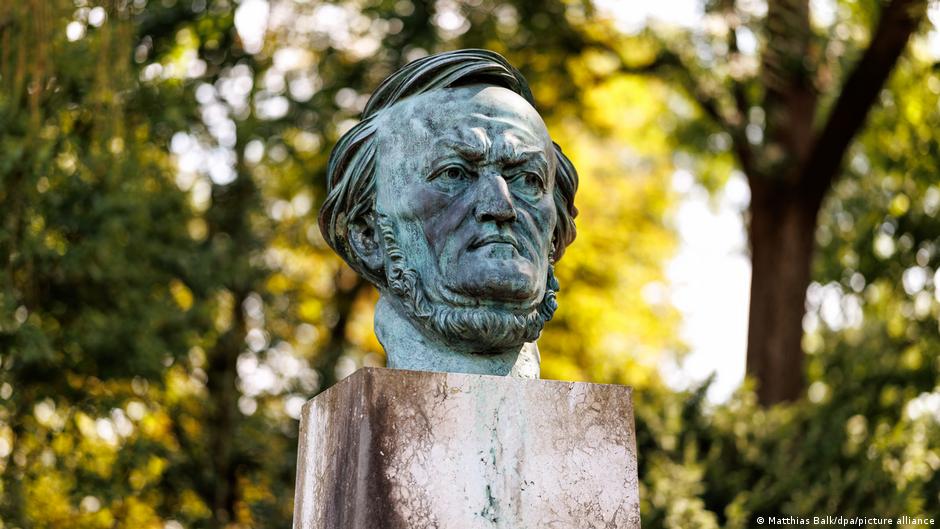
The Bayreuth Festival has long grappled with its intricate and often troubling past. As Friedman pointed out to the Süddeutsche Zeitung, "the soil in Bayreuth is contaminated." Adolf Hitler, a fervent admirer of Wagner's music, was a frequent attendee of the festival. Winifred Wagner, who headed the festival during that period, maintained close ties with the Nazi leadership. Richard Wagner's own antisemitic writings, particularly his 1850 essay "Das Judenthum in der Musik" (Judaism in Music), which expounded his racist theories on Jewish influence in music, continue to shape debates surrounding his work. His widow, Cosima Wagner, later actively promoted many of these ideas. The "Silenced Voices" concert aims to directly confront this dark history by honoring Jewish musicians who suffered professional bans or were murdered during the Nazi regime and the Holocaust, serving as a poignant reminder of the cultural and human cost of such ideologies.
Source: Original Article