The Global Spread of an Australian Species
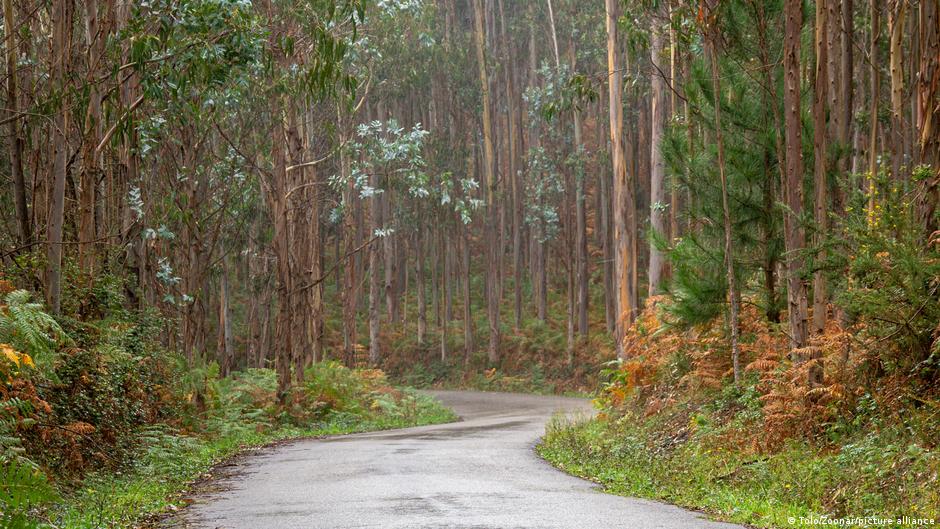
Each year, hundreds of thousands of hikers embark on the Camino de Santiago pilgrimage in Galicia, Spain, traversing a landscape that, while appearing natural, has been significantly transformed. Large expanses of what were once indigenous oak and chestnut forests in northwestern Spain are now dominated by eucalyptus. This ecological shift is not unique to Galicia; the rapid-growing, profitable eucalyptus has been extensively planted across the globe, including in Brazil, Chile, California, India, and South Africa, primarily for the pulp and timber industries.
Eucalyptus plantations now span approximately 22 million hectares across more than 90 countries, establishing themselves as a vital component of many rural economies. However, beneath their seemingly benign canopy lies a heightened vulnerability to extreme wildfires, a concern increasingly highlighted by scientists due to the tree's inherent flammability.
European Heatwaves and Intensified Fire Risks
Europe has experienced an unusually early and intense summer, with heatwaves raising significant alarms about an elevated fire risk. Southern parts of the continent have already been affected. The previous year marked a record for wildfires, with over a million hectares burned, much of it concentrated in the Iberian Peninsula.
While eucalyptus trees are not typically the cause of fire ignition, researchers emphasize their capacity to dramatically escalate fire intensity once a blaze begins. Tim Curran, from Lincoln University in New Zealand, notes that eucalyptus forests are among the most flammable globally. He explains that introducing eucalyptus to new environments can alter fire regimes, impacting factors such as fire intensity, frequency, and heat.
The flammability of eucalyptus is attributed to several characteristics: its leaves contain highly combustible oils, and strips of bark can ignite and be carried by winds as burning embers. Under extreme conditions, these embers can travel vast distances, sparking secondary fires. A notable example occurred during Australia's devastating 2009 Black Saturday fires, where embers were documented to have traveled over 30 kilometers ahead of the main fire front, initiating new blazes.
The Self-Perpetuating Cycle of Eucalyptus Expansion
In regions like Galicia, eucalyptus plantations tend to expand beyond their initial boundaries. Unlike native oak and chestnut trees, which can take over 80 years to mature, eucalyptus reaches maturity in just 15 years. This rapid growth allows eucalyptus to quickly regenerate after fires, giving it a competitive advantage over native species. This creates a self-reinforcing cycle where monocultures expand further, consequently increasing the overall wildfire risk in these landscapes.
The Dual Perspective on Eucalyptus in Galicia
Eucalyptus cultivation in Galicia dates back to the 1970s, experiencing significant growth in the 1990s. A 1992 regional forestry plan projected eucalyptus coverage to reach 250,000 hectares by 2030. However, due to a delay of three decades in updating this plan, eucalyptus spread unchecked. Joam Evans Pim, a local community leader, states that the current coverage is approximately half a million hectares, representing a substantial land area.
Although the regional government has since imposed a moratorium on new eucalyptus plantations, enforcement remains inconsistent, and illegal planting continues. The economic benefits of eucalyptus are considerable; Galician plantations, primarily supplying the pulp and timber industries, generated €167 million in 2024 alone. However, this prosperity is intertwined with mismanagement, particularly as younger generations move to urban centers, leaving behind uncontrolled plantations. The expansion of eucalyptus is therefore a complex issue, driven by both legal and illegal plantations, land abandonment, wildfires, and the invasive nature of the species itself.
Government Response and Community Action
Critics argue that regional authorities were slow to control the expansion of eucalyptus. Luisa Piñeiro, director general of forest management for the Galician government, acknowledges past failures, noting that forest management and control over planted species were inadequate in the 1990s. Despite eucalyptus being primarily native to Australia and considered invasive in many regions due to its rapid spread, the Galician government does not classify it as such. Piñeiro advocates for improved management and greater species diversity rather than outright bans, emphasizing the need for a comprehensive forest management plan that promotes ecological balance.
In Froxán, Galicia, community leader Evans Pim recounts the devastating 2006 wildfires that ravaged the area, leading to eucalyptus invasion. A subsequent fire a decade later prompted community action. The De-Eucalyptus Brigades, a volunteer group, was established to raise awareness and remove eucalyptus from communal lands. Starting with 50 members, the group has grown to 1,500 across Galicia, actively replacing eucalyptus with native trees to create natural firebreaks. Their goal is to foster a self-sustaining, fire-resilient landscape capable of withstanding climate change and prolonged droughts.
The tragic 2017 Portugal wildfires, which resulted in fatalities, serve as a stark warning. Experts, forestry groups, and activists increasingly highlight unmanaged land as a significant fire hazard globally. They argue that the economic advantages of eucalyptus must be carefully weighed against the escalating risks of wildfires. Joaquim Sande Silva of the Polytechnic University of Coimbra suggests that while eucalyptus and the pulp industry have a legitimate place, their cultivation should be strictly regulated, especially concerning the ecosystems they replace.