German Firms Eyeing International Horizons Amid Domestic Challenges
The question of whether German companies are increasingly relocating or expanding operations abroad is currently a subject of considerable discussion, with various reports and analyses offering differing perspectives. While some evidence suggests a continued outward movement, particularly driven by cost considerations, other data indicates a retreat from international engagement among certain business segments.
Reports highlight specific instances of German companies adjusting their domestic operations and expanding internationally. For example, Gardena, a garden tools manufacturer based in Ulm, reportedly plans to reduce its German workforce by 250 positions—approximately 10% of its domestic staff—and transfer some production capabilities to the Czech Republic. Similarly, major global entities like BASF are continuing their international investment strategies, with plans to move service roles to India, potentially impacting jobs at its Berlin facility.
Divergent Trends in Corporate Relocation and Investment
Last year, concerns about an industrial exodus were more pronounced. An online publication, Finanzmarktwelt, highlighted a 'crisis' in German industry in November, referencing Federal Statistical Office data from 2018 to 2023. These figures indicated that approximately 1,300 German companies with over 50 employees relocated business functions abroad between 2021 and 2023. This represents 2.2% of all companies of that size in Germany in 2023 and was associated with an estimated loss of 50,800 domestic jobs. Many observers anticipated an acceleration of this trend, attributing it to Germany's high energy and labor costs.
However, Germany's state-owned development bank, KfW, has identified a contrasting trend. Its research department noted in June that 'Many medium-sized companies are withdrawing from international business.' According to KfW's findings, the number of German medium-sized enterprises active abroad decreased from approximately 880,000 in 2022 to around 760,000 a year later. Dirk Schumacher, KfW's chief economist, attributed this shift to a deterioration in the global environment for foreign trade, citing 'geopolitical tensions in Ukraine and the Middle East, growing export competition from China in key industries, and the protectionist trade policy of the United States.'
Cost Pressures and Strategic Shifts
A different viewpoint emerges from the Association of German Chambers of Commerce and Industry (DIHK). Based on its business climate survey from early 2026, DIHK spokesman Sven Ehling indicated that German industry is experiencing unprecedented cost pressures, prompting many companies to plan increased foreign investments. The DIHK reports that 43% of industrial companies intend to make foreign investments this year, a three percentage point increase from the previous year. Volker Treier, DIHK's head of international trade, explained, 'The reasons are clear: rising costs, structural problems and weak economic conditions in Germany as a business location.'
Historically, foreign investments by German companies often served to strengthen domestic operations, leading to increased employment at home. This was particularly true for investments aimed at market expansion or enhancing sales and customer service. However, the DIHK survey reveals a decline in the proportion of German companies primarily investing abroad for market development, from 30% to 28%. Treier noted a significant shift in motivation: 'Companies are now being forced to invest abroad primarily for cost reasons. This frequently leads to significant cutbacks at domestic sites.' This suggests a change from expansion-driven foreign investment to cost-reduction strategies.
Overall Investment Levels and Regional Shifts
The overarching trend in foreign investment remains complex and not entirely unidirectional. Professor Steffen Müller of the Leibniz Institute for Economic Research Halle (IWH) observes that direct investments abroad by German companies are 'well below peak levels.' According to Bundesbank statistics cited by Müller, annual transaction values averaged €120 billion between 2017 and 2022. In contrast, figures for 2024 stood at €80 billion, and for 2025 at under €100 billion. These numbers, he suggests, 'give little reason to assume that significantly more capital is flowing out than in previous years.'
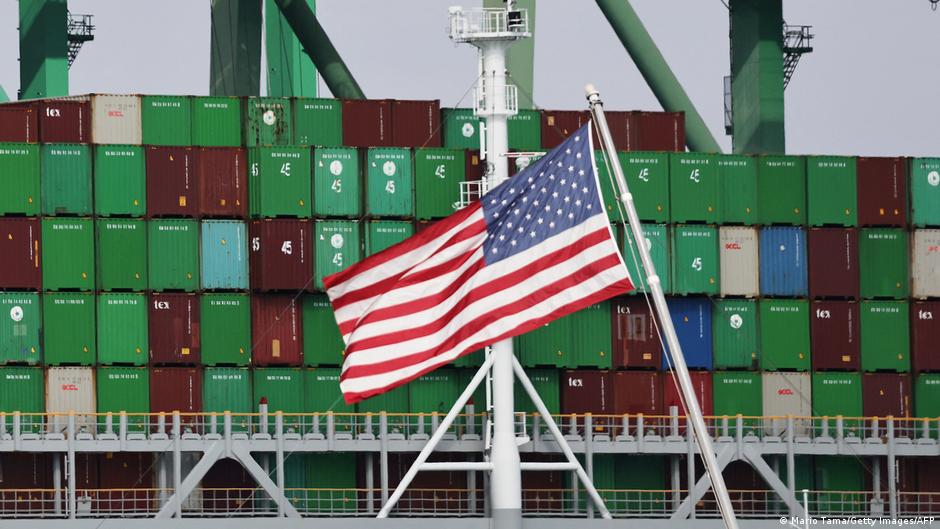
Significant changes are also evident in the target regions for German foreign investment. North America, for instance, appears to be losing some of its appeal, with the share of German companies planning investments there decreasing from 48% to 44%. Concurrently, engagement in Asia is on the rise. The DIHK indicates that the proportion of industrial companies investing in China is increasing from 31% to 34%. The broader Asia-Pacific region (excluding China) is also gaining importance, growing from 21% to 26%. Treier attributed the decline in North American investment interest to 'the tariff dispute with the United States... fueling uncertainty and causing companies to postpone decisions.'
Despite these shifts, the eurozone remains the most crucial investment region for German companies, accounting for 64% of foreign investment. The stability, common single market, and shared currency of the eurozone offer reliable framework conditions, which are particularly valued during periods of geopolitical uncertainty, as highlighted by the DIHK representative.