Political Landscape and Energy Policy Divergence in Eastern Germany
The eastern German state of Saxony-Anhalt, a frontrunner in renewable energy adoption, is currently navigating a complex political environment. The Alternative for Germany (AfD), a far-right party, is seeing increased support ahead of upcoming state elections, raising questions about the future direction of energy policy. This comes despite some local AfD officials, such as Raguhn-Jeßnitz Mayor Hannes Loth, actively promoting renewable energy projects, a stance that seemingly contradicts the party's broader platform.
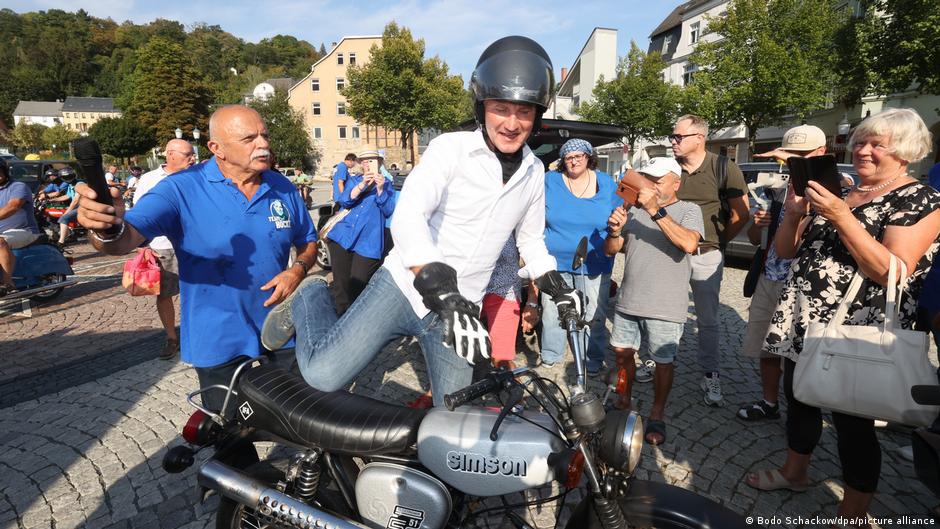
Hannes Loth, the first full-time mayor from the AfD, has ambitious plans for his municipality, including the construction of a battery storage facility and six new wind turbines. Local councilor Tilo Hörtzsch of the conservative Christian Democratic Union (CDU) acknowledges Loth's pragmatic approach, stating, "Mr. Loth isn't someone who brings ideology into everything." Hörtzsch emphasizes the necessity of these technologies for Saxony-Anhalt's economic future.
Concerns Over Potential Policy Reversals
Despite these local initiatives, concerns are mounting regarding a potential statewide policy reversal. Hörtzsch voices apprehension, fearing that Saxony-Anhalt could "take a step backwards" if the AfD's influence expands. These worries are rooted in the AfD's official election manifesto for Saxony-Anhalt, which advocates for halting the coal phase-out, reintroducing nuclear power, and ending energy-related sanctions against Russia. The party also proposes a moratorium on new wind turbine installations and a halt to the admission of non-EU nationals.
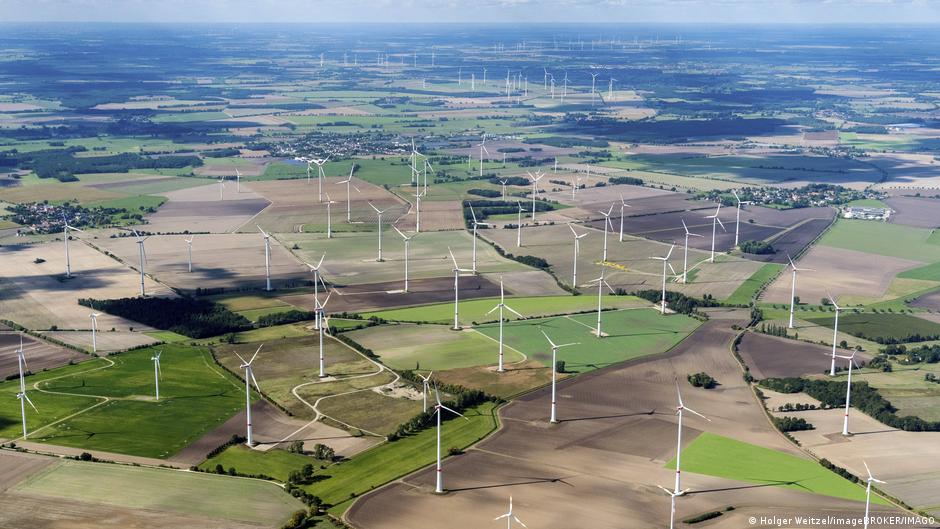
Recent opinion polls indicate significant support for the AfD, with the party, led by Ulrich Siegmund, polling at approximately 41% in Saxony-Anhalt. In contrast, the incumbent CDU candidate, Sven Schulze, is polling around 26%. This shift in political sentiment is occurring in a region that has been particularly successful in integrating renewable energy. In 2025, renewable sources accounted for 57% of Saxony-Anhalt's gross electricity consumption, surpassing the national average of 55%.
The Paradox of Renewable Energy Leadership and AfD Support
A notable paradox exists in eastern Germany: states like Saxony-Anhalt, Brandenburg, and Mecklenburg-Vorpommern are leaders in renewable energy expansion, yet they are also areas where the AfD has gained considerable electoral ground. Roland Abold, managing director of infratest dimap, suggests that economic issues, including the energy mix, play a relatively minor role in the voting decisions of AfD supporters in Saxony-Anhalt. According to their May 2026 survey, voters in the region prioritize refugees and asylum policy, followed by education and the economy, over energy-specific concerns.
Johannes Kieß, a researcher specializing in right-wing extremism at Leipzig University, offers an alternative perspective. He posits that the AfD's electoral success is not driven by innovative or constructive energy policy proposals. Instead, he argues, the party capitalizes on emotional appeals, leveraging resentment against both the political establishment and perceived outsiders.
Economic Implications and Business Sector Warnings
The business community, however, views the situation differently. Companies in eastern Germany identify skilled worker shortages and high energy prices as their primary challenges. While the current coalition government in Saxony-Anhalt (CDU and SPD) aims to expand renewable energy to mitigate reliance on fossil fuels and volatile energy costs, the AfD's platform leans towards supporting fossil fuels. This divergence has prompted business leaders and economists to caution against the AfD assuming governmental power.
Daniel Hannemann, CEO of battery storage manufacturer Tesvolt, based in Wittenberg, characterizes the AfD's migration policy as "economically damaging." He recently told the newspaper Volksstimme that an "atmosphere of isolation" would hinder staff recruitment and international business relations. Hannemann believes the party's energy policy proposals would be even more detrimental. He states, "Anyone who slows the expansion of wind power, questions the legal support framework for renewable energy or seeks to roll back climate commitments is directly harming companies like Tesvolt."
Policy Realism and State-Level Limitations
Researcher Kieß contends that the AfD's program is not only "unrealistic" but would also have "severe negative consequences for Saxony-Anhalt's economy and energy security." State Premier Schulze, addressing the state parliament, highlighted the limitations of state-level influence on many of the AfD's campaign promises. He noted that issues such as scrapping the CO2 tax, removing electric car subsidies, withdrawing from the Paris Climate Agreement, or reintroducing nuclear power require more than the four votes Saxony-Anhalt holds in the Bundesrat (upper house of parliament).
Meanwhile, AfD Mayor Hannes Loth continues his efforts to secure state approval for wind turbine construction in his municipality. Under Saxony-Anhalt's regulations, municipalities receive €0.3 per kilowatt-hour generated by approved wind farms. Schulze recounted his surprise upon receiving Loth's request for support, illustrating the internal contradictions within the political landscape regarding energy policy.
Source: Original Article