Celebrating Three-Quarters of a Century: The Goethe-Institut's Enduring Legacy
The Goethe-Institut, Germany's premier cultural institution abroad, is commemorating its 75th anniversary, marking a significant milestone in its history of promoting cultural exchange, education, and international partnerships. Established in the aftermath of World War II, the institute has evolved from a tool for national rehabilitation to a vital player in global cultural diplomacy, navigating complex political landscapes and adapting its mission to contemporary demands. The celebrations highlight its enduring commitment to dialogue and understanding, even as it confronts new geopolitical pressures and financial constraints.
German President Frank-Walter Steinmeier underscored the institute's importance during the anniversary ceremony in Berlin. He praised the founders' vision and courage, emphasizing that the Goethe-Institut's approach to cultural work abroad, rooted in freedom, remains unique globally. Steinmeier called for robust support from policymakers and society, advocating for a secure financial foundation and strong advocates within the political sphere and beyond. He stressed the necessity of protecting the institution against those who seek to undermine diversity and openness in cultural and educational policies, noting that this support is crucial across all levels of government and society.
President Steinmeier articulated his perspective on foreign policy for non-major powers like Germany, proposing a four-pillar framework. This framework includes military strength for credibility, astute diplomacy for conflict resolution and alliance building, adherence to an international legal order for structure, and crucially, culture and science as forms of 'soft power'—offerings to the global community. This highlights the Goethe-Institut's role as a key instrument in Germany's diplomatic strategy, fostering connections and understanding through non-coercive means.
From Post-War Reconstruction to Global Network
The Goethe-Institut's origins in 1951 were deeply intertwined with Germany's need to rebuild international trust and overcome the legacy of World War II and Nazism. Initially named 'Goethe e.V. zur Fortbildung ausländischer Deutschlehrer,' its primary function was to invite foreign German teachers to Germany for language training. However, its scope quickly expanded to include teaching German abroad. The first international branch opened in Athens in 1952, and within a decade, the institute had established 54 branches globally, significantly outpacing its domestic presence.
Today, the Goethe-Institut operates an extensive network comprising 154 locations across 100 countries, employing nearly 4,400 staff members. Annually, approximately one million individuals undertake official German language examinations through the institute or its partner organizations. This vast reach underscores its success in fulfilling its mission of promoting the German language and culture worldwide, while also fostering intercultural dialogue.
Evolving Cultural Mandate and Adapting to Change
A cornerstone of the Goethe-Institut's success has been its perceived independence. Despite receiving two-thirds of its funding from Germany's Foreign Office, the institute maintains programmatic autonomy, allowing it to adapt its initiatives to reflect contemporary societal and political currents. Early efforts focused on leveraging Germany's classical culture—figures like Schiller, Bach, and Beethoven—to re-establish a positive image internationally. By the 1960s, its cultural offerings diversified to include German jazz and literature, featuring celebrated authors such as Günter Grass, Heinrich Böll, and Herta Müller.
The social upheavals of the late 1960s prompted the Goethe-Institut to engage more deeply with social and political issues, including a critical examination of Germany's Nazi past. This shift marked a move from simply exporting German culture to fostering dialogue, cooperation, and mutual learning—an approach that continues to define its work today. Gesche Joost, President of the Goethe-Institut since 2024, emphasized that the institute's goal is not to export German culture but to explore how societies can collectively shape the future.
Navigating Geopolitical Tensions and Crisis Regions
Throughout its history, the Goethe-Institut has operated in challenging environments. During the Cold War, it was a key player in West Germany's cultural diplomacy, competing with East German cultural initiatives. Following the fall of the Iron Curtain, it expanded rapidly into Eastern Europe and former Soviet bloc countries. More recently, the institute has faced significant challenges due to geopolitical conflicts. In Russia, its operations have been curtailed, while in Ukraine, the Kyiv institute has remained open, adapting to war conditions with hybrid learning models that include in-person classes moving to shelters during air raids.
Joost highlighted that working in crisis regions has become increasingly common for the institute, with colleagues often operating under censorship, armed conflict, or threats to democratic principles. She emphasized the institute's role as a crucial partner for civil society in these areas, requiring sensitivity and diplomatic skill to maintain its presence. The German government's stance on the Middle East conflict has also presented difficulties, leading to boycotts and suspended cooperations in parts of the Arab world. Joost noted the institute's responsibility to explain Germany's position, acknowledge internal debates within Germany, and relay international criticisms back home.
Future Directions: Integration and Funding Challenges
In recent years, the Goethe-Institut has contended with federal funding cuts, necessitating restructuring and the closure of some branches. However, it continues to identify new areas where it can contribute. With Germany facing the challenge of integrating a growing number of international skilled workers, Joost sees the institute playing a vital role. It offers guidance and support for newcomers, helping them navigate the complexities of living and working in Germany, thereby facilitating their integration into society.
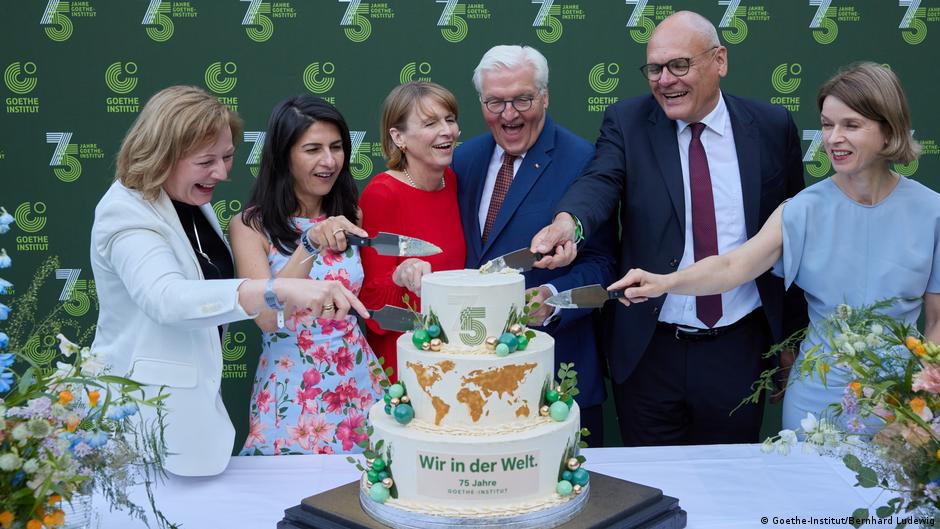
The 75th anniversary celebrations are being held under the motto 'Wir in der Welt' ('We in the World'), featuring a global program of concerts, performances, film series, and discussion events. This extensive program reflects the institute's ongoing commitment to its mission and its partners worldwide, reaffirming its position as a cornerstone of German cultural diplomacy.