The Bayreuth Festival: A Century and a Half of Artistic and Historical Contention
The Bayreuth Festival, an annual event dedicated to the operas of Richard Wagner, is commemorating its 150th anniversary. This significant milestone, however, has been overshadowed by ongoing discussions and critiques regarding the festival's approach to its complex and often troubling history, particularly its association with antisemitism and the Nazi era. The debate centers on whether the institution is adequately confronting its past or, as some suggest, attempting to sidestep uncomfortable truths.
A recent incident highlighted this tension. Jewish public intellectual Michel Friedman was initially invited to deliver a speech at a memorial ceremony for victims of National Socialism, intended to coincide with the festival's opening. His address was planned to delve into Wagner's antisemitism and the festival's historical connections to the Nazis. However, Friedman was subsequently disinvited, only to be reinstated following significant public outcry and a series of contradictory decisions. This episode prompted German newspaper Süddeutsche Zeitung to comment that it reflected a "chronic German desire to be spared from confronting its own history."
Adding to the criticism, Anno Mungen, director of the Research Institute for Music Theater Studies at the University of Bayreuth, accused the festival's leadership of being "historically oblivious" in an interview with the weekly newspaper Die Zeit. His remarks were particularly aimed at the decision to stage Wagner's opera "Rienzi" for the first time during this anniversary season, despite its well-known status as Adolf Hitler's favorite opera. Richard Wagner himself remains a deeply controversial figure, recognized not only as a revolutionary opera composer but also as an outspoken antisemite.
The Unique Vision of Richard Wagner and Bayreuth
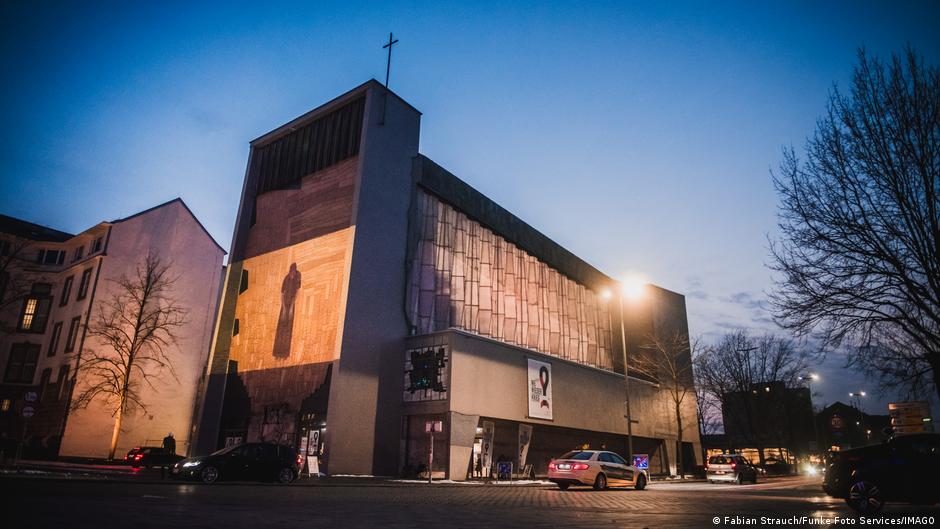
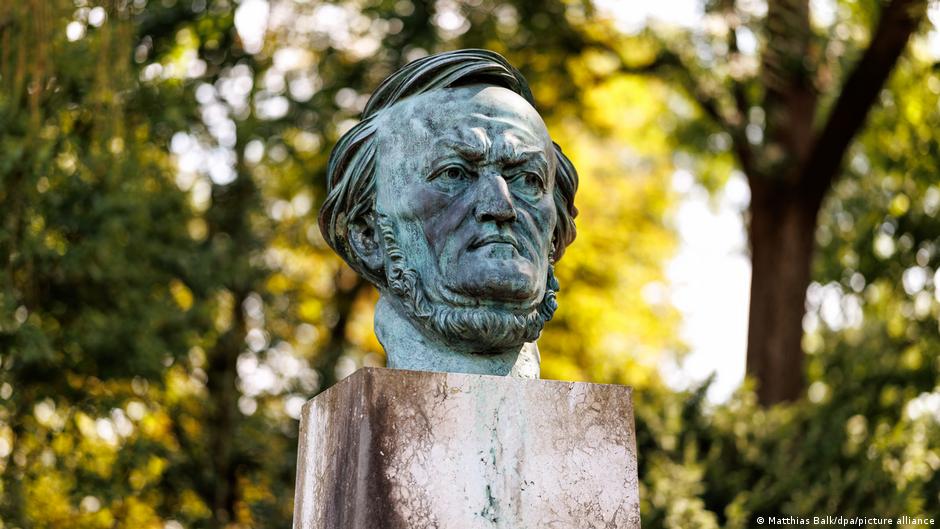
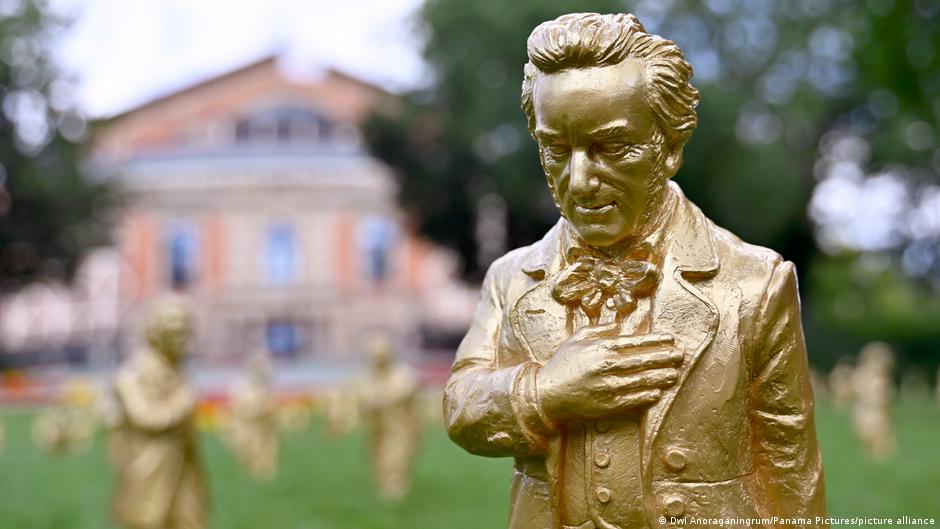
Richard Wagner (1813-1883) conceived his operas as Gesamtkunstwerke, or "total works of art," where music, drama, staging, and design converged under a singular artistic vision. To fully realize this concept, he oversaw the construction of his own dedicated opera house, the Bayreuth Festspielhaus, which he inaugurated in 1876 with the epic 16-hour opera cycle, "The Ring of the Nibelung." Wagner was deeply involved in every aspect of his productions, from designing the theater's architecture to writing his own librettos, directing performances, and overseeing stage design. Many of his heroic figures, particularly in "The Ring of the Nibelung," were drawn from Germanic and Norse mythology. The theme of unconditional love persisting even in death is another recurring motif throughout his extensive body of work.
Bayreuth's Enduring Allure for Audiences
In adherence to Wagner's original intentions, only a select number of his 10 mature operas are performed annually at the festival. Approximately 60,000 visitors from across the globe make the pilgrimage to Bayreuth's "Green Hill" each year, eager to experience the venue largely as Wagner envisioned it. Audiences famously endure austere conditions, including hard wooden seats, limited legroom, and a stuffy, non-air-conditioned auditorium, despite the high cost of tickets. For dedicated Wagner enthusiasts, attending Bayreuth is considered an essential experience.
The Festspielhaus maintains its fidelity to the composer's original design. The orchestra is concealed beneath the stage, performers are brightly illuminated while the audience remains in darkness, and the wood-paneled auditorium ensures remarkably clear acoustics throughout, even in the uppermost sections. These elements collectively contribute to the distinctive atmosphere of the Festspielhaus. Sven Friedrich, director of the Richard Wagner Museum in Bayreuth, observes, "In an age of short, snappy reels watched on a smartphone from the couch, that may seem anachronistic. But perhaps that's exactly what makes it fascinating again."
Wagner's Influence and Appropriation by Hitler
Long after Wagner's death, Adolf Hitler became deeply fascinated by the composer's dramatic use of light and shadow in his productions. Wagner was Hitler's favorite composer, and "Rienzi" was his preferred opera. Hitler admired Wagner's monumental musical style and the recurring leitmotifs within his works. The Nazi regime extensively appropriated Wagner's music for propaganda films and even utilized it as a form of psychological torment in concentration camps. The opera "The Mastersingers of Nuremberg" was traditionally performed on the eve of the Nazis' annual Nuremberg Party Rally. These historical associations, coupled with Wagner's explicit antisemitism, continue to cast a long shadow over the Bayreuth Festival.
Artistic director Katharina Wagner has repeatedly addressed this complex legacy. Notably, in 2017, she invited German-Australian director Barrie Kosky, whose production of "Die Meistersinger" highlighted his interpretation of Richard Wagner’s character "Beckmesser" as embodying stereotypical Jewish attributes, portraying him as a "scapegoat for the trauma of an entire people."
Wagner's Antisemitism and the Family Legacy
Richard Wagner was an avowed antisemite. In 1850, he published the essay "Judaism in Music," in which he argued that Jewish individuals lacked an authentic artistic identity and merely mimicked others. Sven Friedrich notes, "There has always been an undercurrent of antisemitism in Bayreuth, and Cosima, Wagner's wife, was antisemitic as well. The children and grandchildren growing up here in provincial Franconia, with few outside influences, partially absorbed those attitudes."
Hitler developed a close relationship with Wagner's son Siegfried, and particularly with Siegfried's wife, Winifred Wagner. The dictator frequently visited the Wagner family's villa, now the Richard Wagner Museum, finding both refuge and a sense of belonging there. Friedrich explains, "The Festspielhaus was something like his royal court theater."
Post-War Transformations and Modern Innovations
Following World War II, Winifred Wagner and her son Wieland underwent the Allied denazification process. To safeguard the festival from its Nazi associations, Winifred formally transferred her rights to her sons, Wieland and Wolfgang. However, this decision itself proved controversial, as Hitler had granted Wieland special privileges during the war. Facing financial difficulties and seeking to distance the festival from its troubled past, Wieland Wagner revitalized his grandfather's operas with stark, minimalist productions, establishing what became known as the "New Bayreuth" style. After Wieland's death, Wolfgang Wagner assumed sole leadership, initiating the practice of inviting external directors to stage productions. Friedrich credits him with "open[ing] the festival to external directors and pav[ing] the way for a much broader range of artistic styles."
In more recent years, Richard Wagner's great-granddaughter, Katharina Wagner, has endeavored to propel the festival into the 21st century. In 2022, she commissioned director Valentin Schwarz to reinterpret "The Ring" as a contemporary family saga, drawing inspiration from the narrative styles prevalent on platforms like Netflix. The subsequent year, director Jay Scheib employed augmented reality in his production of "Parsifal," adding a digital visual layer to the performance. This year's new "Ring" production integrates stage design created with the assistance of artificial intelligence.
Regarding the new production of "Rienzi," Hungarian directors Alexandra Szemeredy and Magdolna Parditka plan to reinterpret "the Rienzi case" as a courtroom drama, drawing parallels to contemporary populist societies. Prior to the performance, the festival will host a concert featuring music by Jewish composers, followed by Michel Friedman's rescheduled lecture.
Source: 150 years of the Bayreuth Festival: Confronting a troubled legacy