The Unifying Power of Global Football
The World Cup, a quadrennial international football tournament, transcends its primary function as a sporting event, offering profound benefits for mental well-being. Beyond the thrilling matches and athletic prowess, the tournament cultivates an environment conducive to human connection, community building, and a shared sense of purpose, elements critical for psychological health.
Shared Moments: A Catalyst for Connection
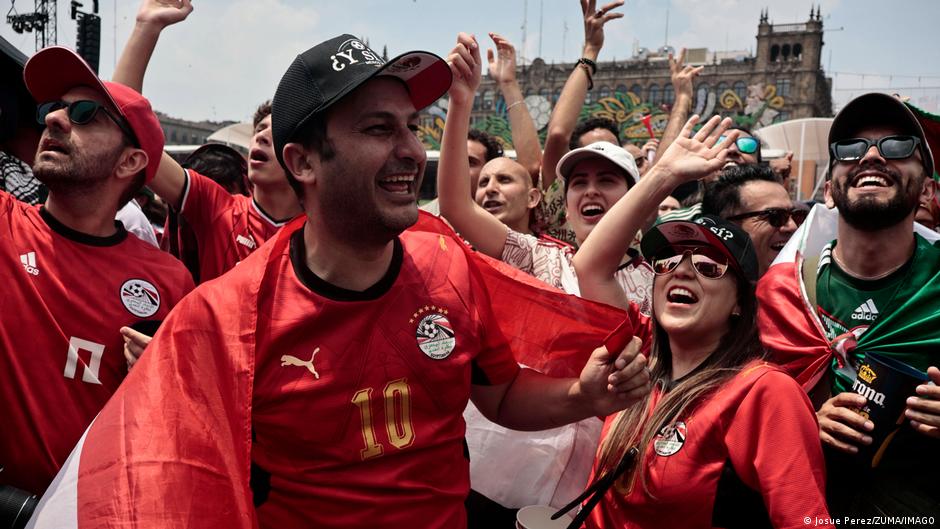
During World Cup viewing events, such as gatherings in pubs or public spaces, a phenomenon often observed is the spontaneous camaraderie among previously unacquainted individuals. The collective cheer following a goal, or the shared embrace in moments of triumph, exemplifies a powerful, transient unity. Clinical psychologist Katie Wood, associated with Swinburne University in Melbourne, emphasizes the critical role of such shared experiences. According to Wood, the most significant protective factor for mental health is 'connectedness'—an intricate web of connections to oneself, to others, to one's community, and to one's cultural identity. Sport, particularly an event of the World Cup's magnitude, effectively facilitates these connections, bringing people together across various social divides.
This form of connection extends beyond established social circles of family and friends. It manifests as a fleeting, yet impactful, feeling of being part of something larger than oneself. The World Cup provides an ideal backdrop for individuals to experience this profound sense of belonging, momentarily dissolving personal boundaries and fostering a collective identity.
Bridging Divides: A Global Spectacle
The World Cup consistently showcases how quickly football can build bridges between diverse populations. Instances abound where fans from myriad countries cheer together, exchange jerseys as mementos, or find themselves united in supporting a particular team. A notable example occurred in Lawrence, Kansas, where the city center transformed into a vibrant public viewing area during a match between Algeria and Austria. Due to the Algerian national team's base being established there, hundreds of local Americans donned Algerian jerseys, painted their faces with national colors, and waved flags, demonstrating an unexpected yet powerful solidarity.
Similar displays of unity were observed in other locations. Following a Round-of-16 match between Switzerland and Colombia in Vancouver, fans were seen exchanging jerseys, symbolizing their shared experience. In Seattle, after the USA's elimination, a Belgian supporter was observed comforting a disheartened American fan, illustrating empathy across team loyalties. Another anecdote from San Francisco highlighted the spontaneous connection forged by the tournament: a stranger, upon seeing a fan's jersey, approached him, offered a hug, and simply stated, 'This is the World Cup,' encapsulating the inherent unifying spirit of the event.
The Fundamental Need to Belong
Katie Wood identifies this unique strength as the core appeal of the World Cup. It enables individuals from vastly different backgrounds to share the same emotional spectrum, albeit for a brief period. As Wood articulates, 'You can come from vastly different walks of life. But the moment you support the same team, a collective experience with a shared goal emerges.' This shared objective taps into a fundamental human need often underestimated: the need to belong. This need is universal, irrespective of whether someone is a lifelong football enthusiast or a first-time viewer.
What truly matters is the collective experience – the palpable tension preceding kickoff, the explosive roar when a goal is scored, and the shared frustration in the face of defeat. As one fan at a fan zone remarked, 'No one knows what we go through as human beings day in and day out. That's why moments like these are so special.' Even those without a specific team affiliation can find themselves swept up in the pervasive atmosphere. A visitor in Philadelphia shared, 'I'm just happy. I don't even have a team, but I've come to love watching the games,' underscoring the tournament's ability to engage even casual observers.
A Healthy Escape from Daily Stressors
The World Cup also provides a valuable opportunity for individuals to disengage from the pressures and routines of everyday life. Wood explains, 'When so much is happening in the world, we look for ways to escape our daily routine for a bit. And experiencing the World Cup—with all the excitement surrounding it—together with other people is a very healthy way to do that.' While the football itself remains the central focus, for many fans, the most enduring memories of a World Cup are often the peripheral moments – the interactions, the shared emotions, and the sense of community that extend beyond the ninety minutes of play.
Source: Original Article