Bundesliga Secures New US Broadcast Deal with Versant Outlets
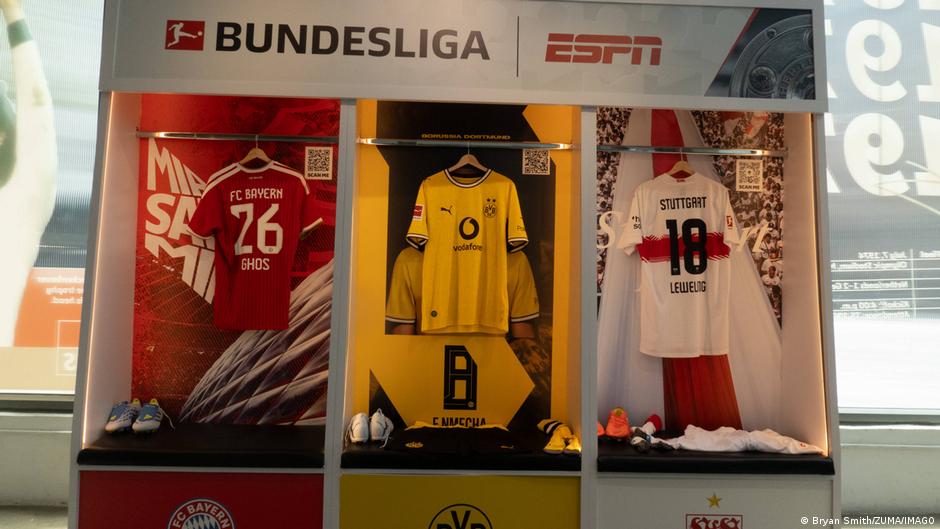
After a six-year tenure with ESPN, the Bundesliga, Germany's premier football league, has announced a new broadcasting agreement in the United States. The new partnership, reportedly extending through the 2030-31 season, involves a combination of USA Network and Fandango, both owned by the media company Versant. This strategic shift is notable for its reported financial terms, which are lower than the previous deal, suggesting a deliberate pivot towards broader audience engagement.
The reported value of the new deal stands at approximately $20 million (€17.4 million) annually. This figure represents a significant decrease compared to the $34 million per year previously paid by ESPN. Versant, the parent company of USA Network and Fandango, is actively working to establish itself as a prominent platform for sports broadcasting rights, particularly for leagues positioned below the top tiers of the NFL and NBA. While Fandango is primarily recognized as a movie ticketing application, Versant aims to diversify its offerings by integrating live sports content.
Under the new arrangement, all more than 300 Bundesliga matches will be available across the USA Network and Fandango platforms. USA Network will require a subscription for access, while Fandango is set to offer ad-supported, free streaming of games. This dual approach aims to cater to different segments of the American audience, balancing paid subscriptions with free accessibility.
Mixed Reactions from US Fans
The announcement has elicited a largely negative response from US-based Bundesliga enthusiasts on social media. Many fans expressed concerns that the move could diminish the league's visibility and momentum in the American market. Comments on platforms like X (formerly Twitter) highlighted the perceived inconvenience and complexity of the new setup compared to the previous ESPN arrangement.
"This will only make the Bundesliga even more obscure," remarked one user, @skierpro. "Any momentum the league had in the US and growing viewership will be destroyed. The folks in Germany signing this agreement have no idea about the US it seems. They just shot themselves in the foot with this deal."
Another user, Corbin Williams, noted the simplicity of ESPN's comprehensive sports coverage, stating, "This is bad. The simplicity of having every game on ESPN that already has a lot of other sports was perfect. Fandango, a company with nearly no sports streaming experience, may be free, but the games on USA will require an expensive YT TV, Fubo or similar package." Similarly, Eric Smith lamented the change, comparing the experience of finding games on Fandango to an incongruous shopping experience.
Strategic Rationale: Reach Over Revenue
Despite the apparent financial reduction, some analysts view the new deal as a calculated strategic move by the Bundesliga. Dominik Schreyer, a professor of sports economics at Germany's Otto Beisheim School of Management, suggested that the agreement prioritizes broader distribution and discoverability over immediate financial gain. "From the outside, the new agreement appears to deliver less media-rights income per season but broader distribution, greater discoverability, and a better chance of reaching viewers beyond the Bundesliga's existing fan base," Schreyer explained.
Schreyer acknowledged that the lower fee is a business disappointment but emphasized the broader context of the evolving media rights market. He highlighted the increasing selectivity of the market and intense competition for audience attention, suggesting that maximizing the financial return from each cycle may no longer be the sole objective. "The new distribution model could still prove strategically valuable if its broader reach helps build a larger and more commercially attractive audience over time," he added.
The previous ESPN coverage, particularly its commentary and reporting, garnered praise from many fans. However, Schreyer speculated that the Bundesliga might have lacked sufficient prominence within ESPN's extensive sports portfolio, potentially hindering audience expansion. He suggested that being a more central offering for a partner like Versant, which aims to differentiate its live-sports content, could be a more beneficial arrangement, even if the precise motivations remain undisclosed.
Challenges and Opportunities for Growth
Robin Austermann, Executive Vice President of Bundesliga Americas, expressed optimism about the league's growth potential in the US, citing the momentum generated by the upcoming 2026 World Cup. He noted a 43% increase in Bundesliga fans in the US over the past five years. However, the league faces broader challenges, including Bayern Munich's long-standing domestic dominance, which can reduce competitive suspense, and a perceived lack of global star players compared to other major leagues. Germany's recent performances in international tournaments have also impacted the standing of German football globally.
The Bundesliga confronts a considerable task in strengthening its position in future broadcasting negotiations, with many factors extending beyond its immediate control. Nevertheless, there is hope that the enthusiasm surrounding the 2026 World Cup, co-hosted by the USA, Canada, and Mexico, can be leveraged to the Bundesliga's advantage. Schreyer emphasized the importance of "prominent scheduling, strong promotion, and localized storytelling" to cultivate a larger audience. He believes that repeated exposure to the product will allow viewers to become familiar with clubs and players, understand rivalries, and ultimately transform occasional viewing into sustained fandom and commercial value.
Source: Original Article