
Euclid's Revelations: Peering into the Cosmic Dawn
The European Space Agency's (ESA) Euclid space telescope, launched in 2024, has made significant strides in mapping the universe, with its latest findings offering an unparalleled look into the cosmos's infancy. Researchers have announced the discovery of 31 ancient quasars, two of which stand out as the earliest ever detected. These remarkable objects provide a unique opportunity to understand the universe when it was merely 670 million years old, representing less than 5% of its current age.
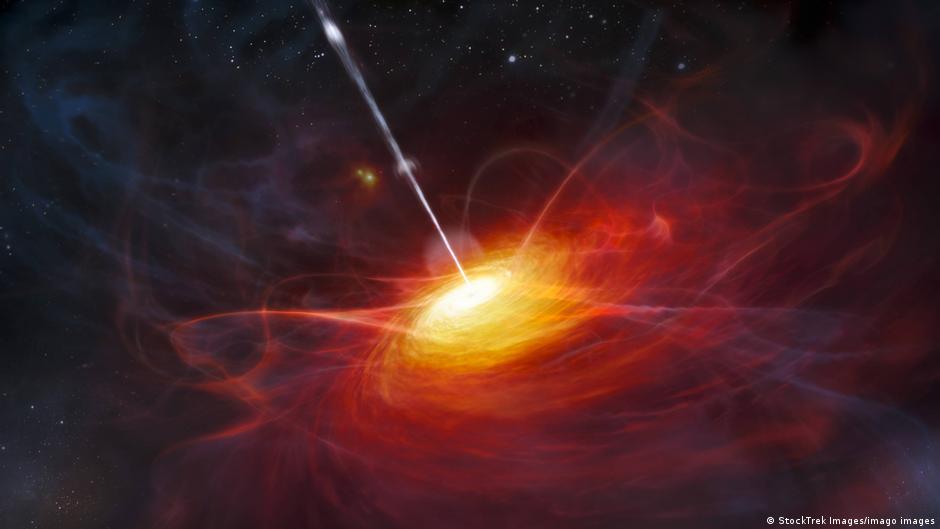
Quasars, often described as cosmic lighthouses, are exceptionally luminous galactic nuclei powered by supermassive black holes actively accreting matter. Their immense brightness allows them to be observed across vast cosmic distances and back through time, making them invaluable tools for astrophysicists studying the early universe. By examining these distant beacons, scientists can reconstruct the conditions that led to the formation of early galaxies and the growth of their central supermassive black holes, including those that eventually evolved into structures like our own Milky Way.
A Leap in Quasar Detection Efficiency
The ability of Euclid to detect these ancient quasars marks a substantial advancement in astronomical observation. Daming Yang, lead author of a study detailing these discoveries, highlighted the telescope's improved capabilities. "Before, we could only find a handful of the very brightest ancient quasars, but Euclid lets us search far more efficiently across huge areas of [the night sky] to capture much fainter light. It's a unique tool for quasar hunting," Yang stated. This enhanced detection efficiency has more than doubled the number of known quasars with a redshift of 7 or higher, a metric indicating extreme distance and age.
The two most ancient quasars identified in this new dataset are designated EUCL J172902.75+641018.1 and EUCL J125308.55+705432.3. Their detection, along with 29 others, provides a rich new sample for astrophysical research. Historically, locating such distant quasars has been a painstaking process, taking over a decade to identify the first ten quasars with redshifts above 7. Euclid, in contrast, has surpassed this number within its first year of operation, underscoring its revolutionary impact on the field.
Understanding Redshift: A Cosmic Distance Marker
The concept of 'redshift' is central to understanding the age and distance of these newly discovered quasars. Redshift refers to the phenomenon where light from distant celestial objects appears shifted towards the red end of the electromagnetic spectrum. This occurs because the universe is expanding, stretching the wavelengths of light traveling through it over billions of years. The greater the redshift, the farther away the object is, and consequently, the further back in time we are observing it.
While often compared to the Doppler Effect in sound, where the pitch of a siren changes as it moves towards or away from an observer, redshift in cosmology is primarily due to the expansion of space itself rather than the object's motion through space. As light from these ancient quasars journeys across the expanding cosmos, its wavelengths are stretched, making it appear 'redder' to observers on Earth. This measurement allows astronomers to precisely determine the distance and age of these primordial objects, effectively using them as cosmic time markers.
Implications for Early Universe Research
The discovery of this expanded collection of ancient quasars provides critical data for refining models of cosmic evolution. Quasars are integral to understanding the 'reionization epoch,' a period roughly 150 million to 1 billion years after the Big Bang, when the universe transitioned from a neutral, opaque state to the transparent, ionized state we observe today. The intense ultraviolet radiation emitted by early quasars and massive stars is believed to have played a crucial role in this reionization process.
Furthermore, these observations offer insights into the co-evolution of galaxies and their central supermassive black holes. The existence of such massive black holes at such an early stage in the universe's history challenges current theoretical models and prompts further investigation into the mechanisms of rapid black hole growth. The sheer number of new quasars identified by Euclid will allow for statistical analyses that were previously impossible, providing a more robust understanding of the properties and distribution of these energetic objects in the nascent universe.
As Euclid continues its mission to map the universe's dark matter and dark energy, its ability to uncover such ancient and distant phenomena will undoubtedly continue to reshape our understanding of cosmic origins and evolution, propelling astrophysics into a new era of discovery.
Source: Original Article