Germany's Shifting Fiscal Landscape
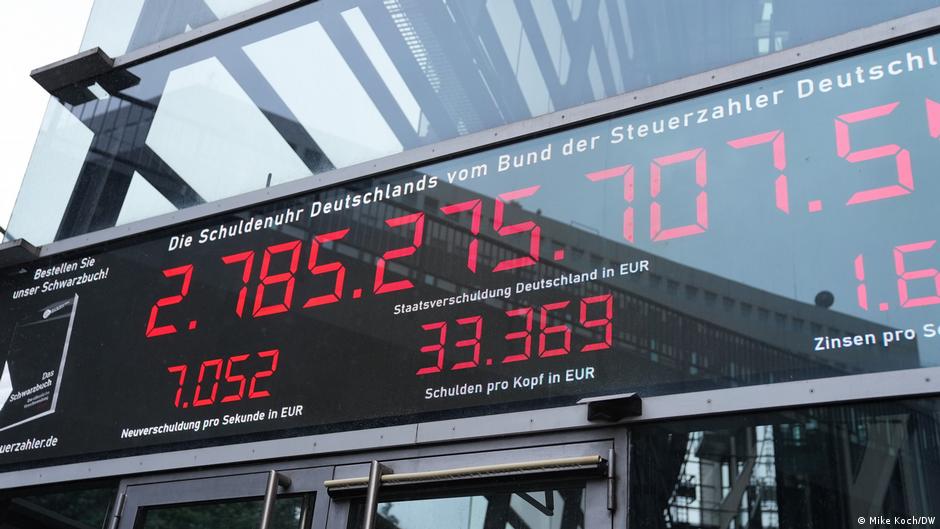
Germany is grappling with an escalating national debt, a situation highlighted by the symbolic 'debt clock' in Berlin, which continuously tallies the nation's financial obligations. As of July 6, the clock registered a staggering €2.78 trillion ($3.18 trillion), a figure projected to grow further with the recently announced 2027 draft budget. This budget, presented by Finance Minister Lars Klingbeil of the Social Democratic Party (SPD), outlines total expenditures of €555.4 billion, with a notable increase in defense spending set to reach €109.7 billion—a one-third rise from the previous year. To cover the significant gap between expenditures and tax revenues, the plan anticipates incurring nearly €119 billion in new debt.
The Role of Special Funds and Defense Prioritization
Beyond the primary budget, Germany utilizes debt-financed special funds, often referred to as 'shadow budgets,' which are allocated over several years and thus not fully reflected in the annual budget. One such fund, totaling €500 billion, is dedicated to infrastructure maintenance and restoration, as well as advancing Germany's climate-neutrality goals. This fund, distributed over 12 years, aims to address critical needs such as repairing dilapidated bridges, roads, and the rail network.
A separate, substantial special fund has been established for the Bundeswehr, Germany's armed forces. The nation plans a gradual increase in defense spending, targeting 3.5% of its Gross Domestic Product (GDP) by 2029, with an ultimate goal of reaching NATO's new target of 5% by 2035. Finance Minister Klingbeil justified this significant shift by referencing the ongoing conflict in Ukraine, stating that Russian President Vladimir Putin's 'imperialist delusions' pose a severe threat to European peace. He emphasized the necessity of rapidly compensating for three decades of reduced defense spending, asserting that achieving this without incurring new debt is an impossibility.
Navigating the Debt Brake and Economic Headwinds
When combining the debt from the regular budget with that from special funds, Germany's new debt for 2027 is projected to reach approximately €203 billion. Financial planning indicates that government spending could rise by an average of 5% annually through 2030, while tax revenues are expected to grow at a slower rate of about 3% per year. This growing disparity means a larger portion of tax revenue will be allocated to interest payments, potentially reaching €80 billion by 2030, with almost one in five euros of tax revenue going toward debt servicing.
Germany's Basic Law, its constitution, includes a 'debt brake' mechanism, limiting additional borrowing to 0.35% of GDP. However, defense and security expenditures are largely exempt, and economic downturns can allow for higher debt limits. Despite these fiscal challenges, Minister Klingbeil maintains that Germany, as Europe's largest and the world's third-largest economy, can manage this debt, noting that its debt level remains below the Eurogroup average. While the eurozone limits debt to 60% of GDP, Germany's debt is projected to reach 69.5% in 2027.
Further complicating the fiscal outlook is Germany's sluggish economic performance. The current government, formed in May 2025 by a coalition of the Christian Democratic Union (CDU)/Christian Social Union (CSU) and the SPD, aimed to revitalize the economy but has faced persistent challenges. Klingbeil attributed some of the economic slowdown to external factors, citing a 'reckless war against Iran' as impacting expected economic recovery.
Impending Cuts and Social Welfare Concerns
To generate new revenue, the government plans to introduce new taxes, including a plastic tax, a sugar tax, and higher levies on tobacco and alcohol, alongside a proposed 'tax on the super-rich.' However, these measures are considered insufficient to address the budget deficit, necessitating government-wide cuts. These reductions will affect not only ministries but also federal financial aid for social security funds, including pension and health insurance, which rely on billions in annual subsidies. The German Trade Union Confederation has voiced strong criticism, labeling this approach an 'enormous imbalance' where social welfare benefits are reduced while military spending dramatically increases.
Klingbeil also intends to draw funds from the Climate and Transformation Fund (KTF), which is financed by revenues from the EU Emissions Trading System. This move has sparked opposition from environmental groups and the Green Party, who argue against using these funds to plug budget holes.
Ministerial Austerity and International Aid
Finance Minister Klingbeil has mandated across-the-board cuts for all ministries, with the notable exception of the Defense Ministry. In 2027, ministries face a 1% budget reduction, escalating to 3% in 2028. Development aid, a sector that has seen cuts in recent years, is slated for another €500 million reduction in 2027, bringing its total budget down to €9.5 billion. Klingbeil acknowledged these as 'tough decisions' but affirmed Germany's commitment to remaining a 'truly credible partner' internationally, noting that following the US withdrawal from international development financing, Germany is now the largest donor.
Children's aid organization Save the Children has urged the Bundestag to significantly enhance humanitarian aid and development cooperation funding during the parliamentary budget review process. The draft budget will undergo deliberation in parliament after the summer recess in September, with a final adoption anticipated by the end of November.
Source: Original Article