Distinguished Lawyer and Author Receives German Peace Prize
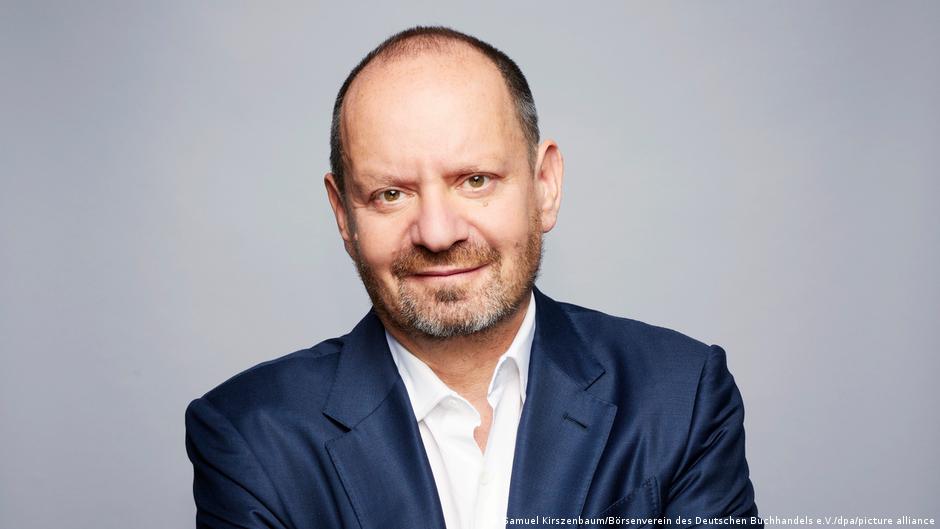
The Peace Prize of the German Book Trade, a significant accolade celebrating individuals who foster peace through their work, has been bestowed upon French-British lawyer and author Philippe Sands. The announcement was made by the prize's board of trustees, highlighting Sands' profound impact on international legal discourse and his unwavering commitment to human rights.
The jury's statement lauded Sands' literary contributions, noting, "In his literary work, which is distinguished both by narrative brilliance and historical depth, Philippe Sands devotes as much attention to the motives of the perpetrators as to the suffering and lives of the victims." They further emphasized his legal work, stating, "At the heart of his legal work is a commitment to the universal rights of every human being, evidenced in his advocacy for victims of war crimes, racism, torture and colonial injustice." Beyond his role as a chronicler of international law violations, Sands is also a leading advocate for the recognition of ecocide as an international crime.
A Personal History Fueling a Dedication to Justice
Born in London on October 17, 1960, Sands completed his legal education at the University of Cambridge in 1983. He quickly established himself as a prominent figure in international law. His personal background, as a descendant of Holocaust survivors, has deeply influenced his work, particularly in tracing the historical development of legal concepts such as genocide and crimes against humanity. His critically acclaimed 2016 historical memoir, "East West Street: On the Origins of Genocide and Crimes against Humanity," delves into the lives of the two Jewish lawyers who were instrumental in establishing these concepts in the aftermath of World War II. This work has been translated into over 30 languages, underscoring its global resonance.
Sands has appeared as counsel in more than two dozen cases before the International Court of Justice (ICJ) in The Hague. His notable representations include advocating for the Solomon Islands regarding the threat and use of nuclear weapons, Georgia in its dispute with Russia concerning the South Ossetia conflict, and Croatia in its genocide claim against Serbia. In 2024, during the ICJ public hearings on the legal consequences of Israel's policies in the Occupied Palestinian Territories, he argued for Palestinian statehood and the inherent right to self-determination. Currently, he is representing The Gambia in its ICJ case against Myanmar, which faces charges of committing genocide against the Rohingya Muslims.
Bestselling Works Inspired by Landmark Legal Battles
Sands was intimately involved in the significant 1998 arrest of Chilean dictator Augusto Pinochet. In a groundbreaking legal case, he argued against Pinochet's immunity, contributing to a ruling that fundamentally reshaped international law by establishing that former heads of state do not possess absolute immunity for international crimes. His 2025 non-fiction work, "38 Londres Street: On Impunity, Pinochet in England and a Nazi in Patagonia," revisits the intricate connections between Pinochet and Nazi commander Walther Rauff, who aided in establishing the Chilean internal security apparatus during the military dictatorship, and the subsequent attempts to extradite both men.
Another of Sands' cases inspired his 2022 book, "The Last Colony: A Tale of Exile, Justice and Britain’s Colonial Legacy." This work examines the displacement of the inhabitants of an island within the Chagos Archipelago in the Indian Ocean in the late 1960s, a period marked by efforts to dismantle colonial impacts. The forced relocation led to the creation of the "British Indian Ocean Territory," and the Mauritian government continues its efforts to regain control over the archipelago.
In the early 2020s, Sands was also a leading figure among the legal scholars who developed the concept of ecocide. Drawing upon principles of international criminal law, they posited that severe, large-scale environmental destruction should be recognized and prosecuted as an international crime. He has since been actively campaigning for ecocide's recognition under the jurisdiction of the International Criminal Court, aiming for it to become the fifth core international crime, alongside genocide, crimes against humanity, war crimes, and the crime of aggression.
The Legacy of the Peace Prize
The Peace Prize of the German Book Trade includes a monetary award of €25,000 ($28,382) and is traditionally presented at the conclusion of the Frankfurt Book Fair, which this year is scheduled from October 7 to 11. The German Publishers and Booksellers Association, the professional organization representing the trade, has been awarding this prize since 1950. Recent recipients include historian Karl Schlögel in the preceding year and Anne Applebaum in 2024. The list of distinguished past winners features prominent literary figures such as Salman Rushdie, Margaret Atwood, Svetlana Alexievich, and Mario Vargas Llosa.
Source: Original Article